Behavioral Segmentation Shaping Reward Strategies on UK Wagering Platforms
Written by Sam Hoffmann · Aug 19, 2026
Behavioral Segmentation Shaping Reward Strategies on UK Wagering Platforms
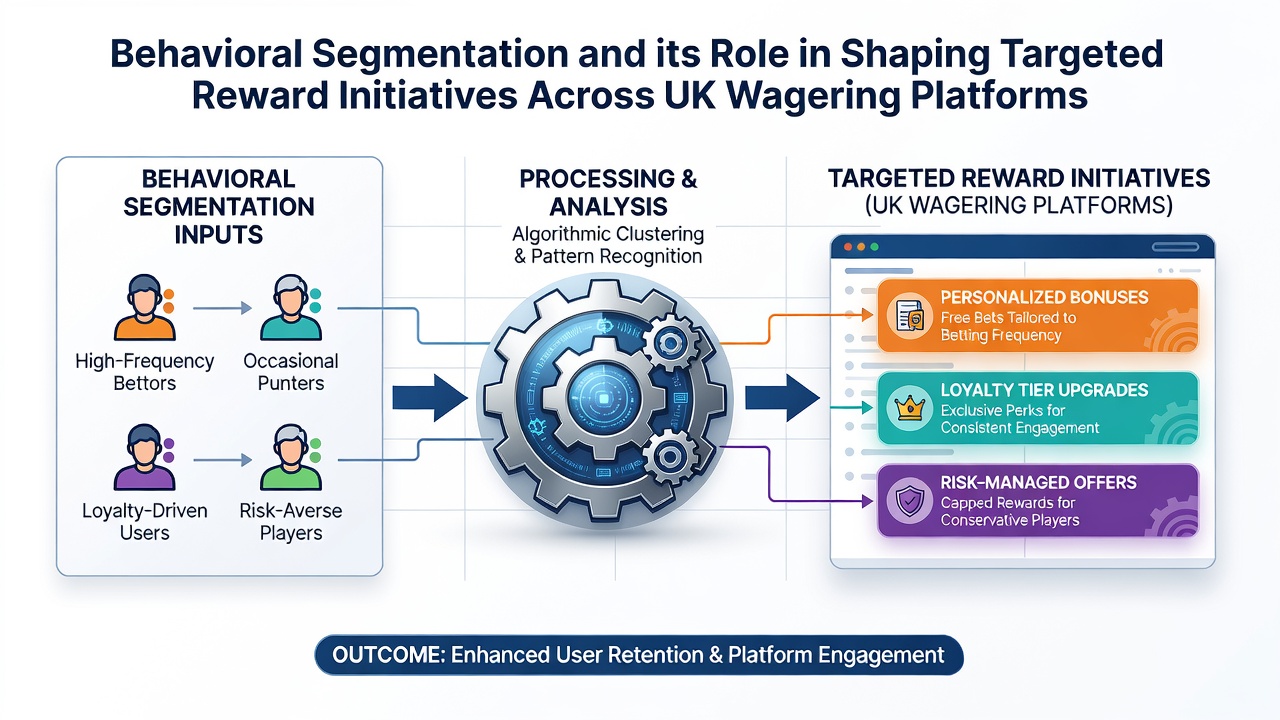
Behavioral segmentation divides users according to observable actions such as bet frequency, preferred game types, deposit patterns, and session duration, and UK wagering platforms apply these divisions to design reward initiatives that align with individual activity levels. Data collected through account tracking systems reveals clusters of users who place high-volume accumulator bets versus those who favor single-event wagers or slot sessions, allowing operators to route specific incentives like enhanced odds or free spin packages to matching segments. Researchers have observed that platforms tracking these patterns achieve higher engagement rates because the offers reflect actual past behavior rather than generic promotions distributed to all accounts.
Core Elements of Behavioral Segmentation in Betting Environments
Segmentation begins with metrics that capture how users interact with betting interfaces, including average stake size, time between deposits, and response rates to previous promotions, while platforms categorize participants into groups such as frequent sports bettors, casual casino players, and high-roller accumulators. Analysts combine these data points with recency and monetary value indicators to refine groupings, and the resulting profiles guide decisions on whether a user receives a reload multiplier, cashback percentage, or loyalty tier upgrade. Studies from the University of Nevada Gaming Research Center indicate that operators employing multi-variable segmentation report improved retention figures compared with platforms relying solely on demographic filters.
Platforms further refine segments by monitoring responses to time-limited events, such as midweek football fixtures or weekend slot tournaments, and they adjust reward triggers accordingly. One segment might receive accumulator insurance on specific leagues, whereas another obtains cashback after a defined number of spins, and this differentiation reduces overlap between offers that previously competed for the same user attention. Observers note that such precision becomes especially evident during peak periods like the August 2026 football season start, when operators deploy tailored free bet credits based on historical fixture engagement data.
Targeted Reward Structures Derived from User Behavior
Reward initiatives built on behavioral data include deposit-match escalators for users who consistently add funds on payday cycles, cashback formulas calibrated to weekly loss thresholds for regular sports bettors, and VIP progression paths accelerated by measured play volume. These structures operate through automated systems that evaluate account activity in real time, then issue qualifying offers without manual intervention, and the process maintains consistency across desktop and mobile channels. Figures from industry reports compiled by the European Gaming and Betting Association show that platforms using behavior-linked rewards experience lower opt-out rates from promotional emails and push notifications.
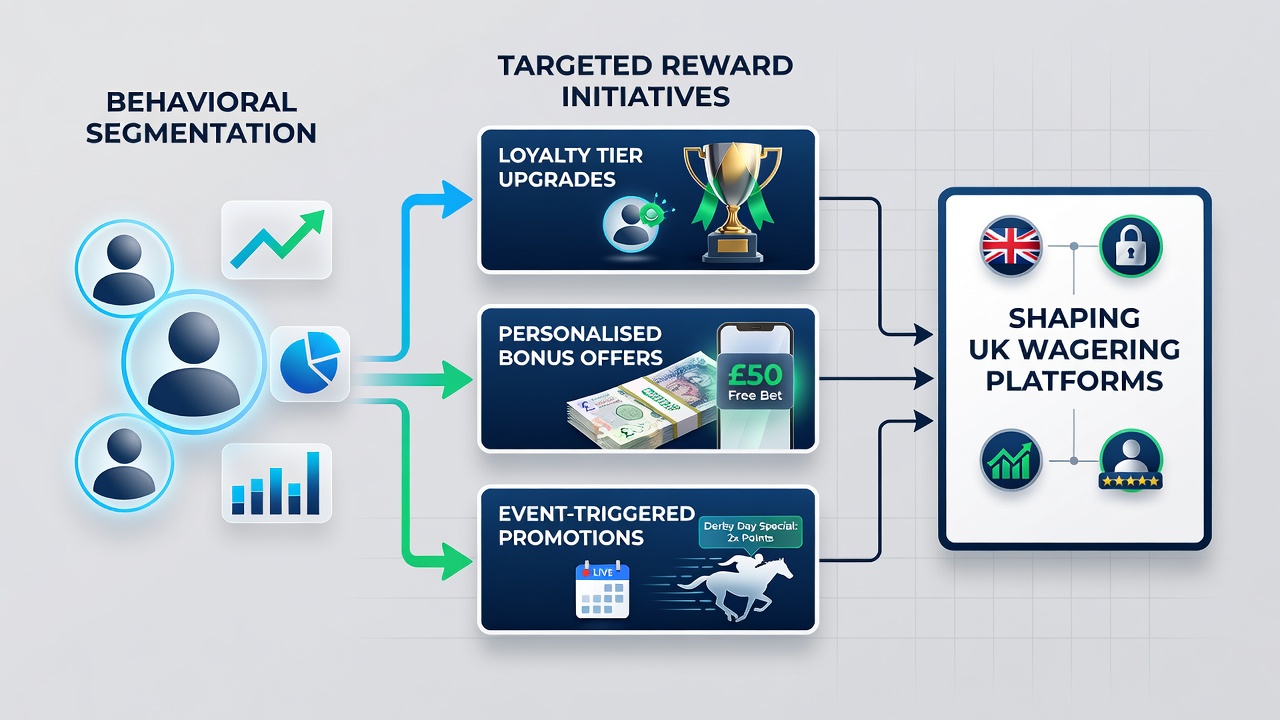
Examples of implementation appear in schemes that grant loss-recovery credits to segments demonstrating regular but moderate betting patterns, while separate cohorts receive game-specific multipliers tied to live dealer sessions or accumulator challenges. Operators track completion rates of playthrough requirements across segments and modify thresholds to sustain participation without extending timelines beyond observed user tolerance levels. Data indicates that segments receiving behavior-matched incentives complete associated wagering conditions at higher percentages than those exposed to uniform bonus terms.
Integration with Regulatory and Platform Requirements
UK operators must align behavioral segmentation practices with responsible gambling protocols, which means reward triggers incorporate spending limits and self-exclusion flags before offers activate. Systems cross-reference behavioral profiles against these safeguards, and any segment showing rapid escalation in stake sizes receives adjusted incentives focused on controlled play rather than volume increases. This integration ensures that targeted rewards remain within frameworks established by oversight bodies while still delivering differentiated value to distinct user groups.
Technical infrastructure supporting segmentation includes API connections between betting engines and customer relationship management databases, enabling near-instant updates to reward eligibility as new activity data arrives. Platforms test segment stability through periodic audits that verify whether users remain in assigned categories or migrate based on evolving patterns, and adjustments follow when migration exceeds predefined thresholds. Such maintenance keeps reward initiatives relevant as user habits shift across seasons or product preferences change.
Conclusion
Behavioral segmentation supplies UK wagering platforms with a structured method for matching reward initiatives to documented user actions, resulting in differentiated offers that address specific betting habits and engagement levels. Continued refinement of data inputs and segment boundaries supports ongoing adaptation to market conditions, including seasonal peaks such as the August 2026 schedule changes. Platforms that maintain accurate behavioral profiles while respecting regulatory boundaries sustain reward programs that reflect actual participation patterns across their user base.